

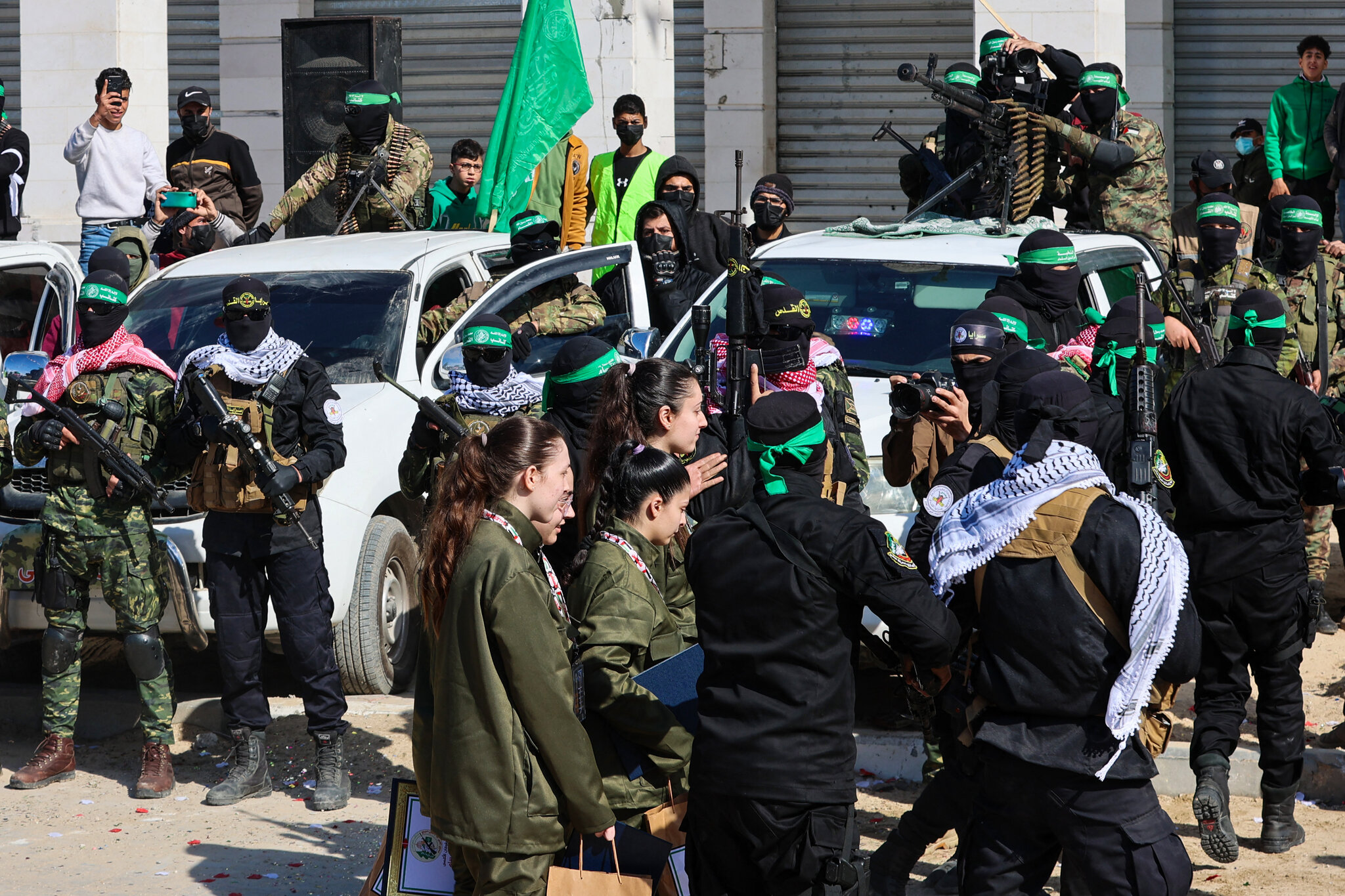
The ongoing conflict in Gaza Strip has placed immense strain on both governance and daily life, forcing Hamas into a position where survival and reconstruction must occur simultaneously. As war continues to shape the region’s reality, Hamas appears to be recalibrating its approach, not only as a military force but also as a governing authority attempting to stabilize a deeply fractured society.
In the aftermath of sustained airstrikes, infrastructure damage, and humanitarian crises, the challenge facing Hamas extends beyond resistance. It now includes the urgent task of maintaining order, restoring essential services, and preserving a sense of continuity for a population living under extreme conditions. This dual role, fighter and administrator, has become increasingly difficult to sustain.
Efforts to pull the territory back together have centered on maintaining basic governance structures despite widespread destruction. Civil systems such as healthcare coordination, local policing, and aid distribution have been adapted to operate in fragmented and resource-scarce environments. Informal networks have emerged to replace damaged institutions, reflecting a broader attempt to keep societal functions intact even as physical infrastructure remains compromised.
At the same time, Hamas has sought to reinforce its internal cohesion. Conflict often tests the unity of leadership and command structures, and maintaining organizational discipline is critical under such circumstances. Reports and regional analyses suggest that strategic adjustments are being made, not only in military operations but also in political messaging, aimed at preserving legitimacy among the local population while continuing to assert resistance externally.
However, the conditions under which these efforts are unfolding present significant limitations. The humanitarian situation in the Gaza Strip remains severe, with shortages of food, water, medical supplies, and electricity affecting daily life. Civilian displacement and psychological trauma further complicate any attempt at structured recovery. In such an environment, rebuilding is not a linear process but a fragile and often reversible effort.
The possibility of failure remains substantial. Continued military pressure poses an immediate threat to any progress made in stabilization. Repeated strikes on infrastructure can undo reconstruction efforts within moments, creating a cycle where rebuilding is constantly interrupted by renewed destruction. This dynamic not only delays recovery but also erodes public confidence in governance.
Additionally, internal pressures cannot be overlooked. Prolonged hardship can lead to frustration among civilians, particularly when basic needs remain unmet. While Hamas maintains a degree of control, the long-term sustainability of that control is closely tied to its ability to deliver stability and relief. If conditions deteriorate further, the risk of internal dissent or weakening authority becomes more pronounced.
Externally, the broader geopolitical environment adds another layer of uncertainty. Regional actors, international responses, and shifting alliances all influence the trajectory of the conflict. Any escalation or expansion could significantly alter the balance, either reinforcing Hamas’ position or further isolating it.
The economic dimension also plays a critical role. With limited access to resources and ongoing restrictions affecting trade and movement, the capacity for meaningful reconstruction is constrained. Without sustained access to external aid or economic channels, efforts to rebuild may remain temporary and insufficient to support long-term recovery.
What emerges from this situation is a complex and precarious reality. Hamas is not only navigating a battlefield but also attempting to manage a society under siege. The success of its current direction depends on factors that extend far beyond its direct control, including the intensity of ongoing conflict, the availability of humanitarian support, and the resilience of the civilian population.
Glopen World Perspective in Conclusion
From a broader perspective, the situation in the Gaza Strip highlights the inherent difficulty of rebuilding amid active conflict. Governance, in such conditions, becomes an exercise in endurance rather than progress.
While efforts to stabilize and rebuild reflect a strategic necessity, the risk of failure remains deeply embedded in the ongoing realities of war. Without a significant reduction in hostilities, any reconstruction effort, regardless of intent or organization, faces the constant threat of reversal.
Ultimately, the future of the region will depend not only on internal strategies but on the broader possibility of de-escalation. Until then, rebuilding remains fragile, and the line between recovery and collapse continues to blur.