

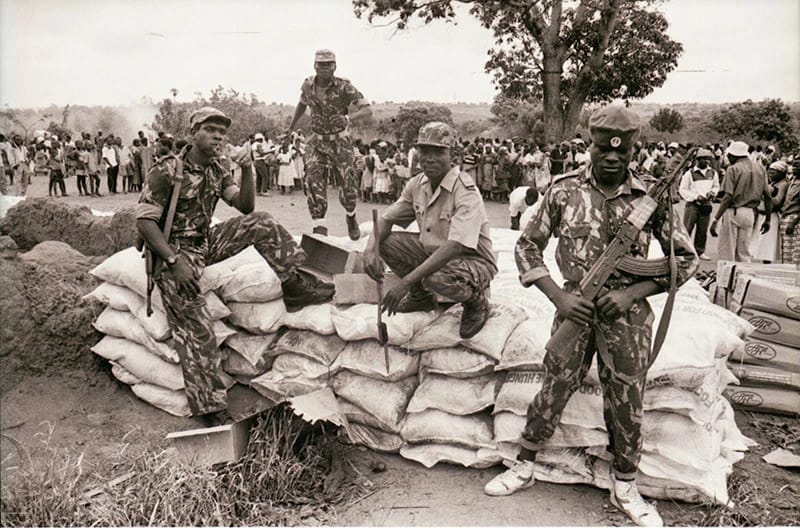
Mozambique’s history is deeply shaped by centuries of foreign control, with colonization leaving profound marks on its culture, language, and social structure. Understanding how this southeastern African nation came under Portuguese rule, and why Portuguese, rather than English, became its dominant language, requires looking back to the era of European expansion and the motivations that drove it. The story is not only about political domination but also about identity, resistance, and the long-term effects on ordinary people.
Early Contact and the Arrival of the Portuguese
Before European powers arrived, the region now known as Mozambique was home to thriving African societies connected through trade networks across the Indian Ocean. Coastal towns interacted with Arab, Persian, and Swahili traders, exchanging gold, ivory, and other goods. These communities were culturally rich and economically active, with established systems of governance and communication.
The turning point came in 1498, when Portuguese explorer Vasco da Gama reached the East African coast during his voyage to India. His arrival marked the beginning of Portugal’s long involvement in the region. Initially, the Portuguese were interested in controlling trade routes rather than governing territory. They established forts and trading posts along the coastline, gradually inserting themselves into local economies.
Over time, however, trade interests evolved into territorial ambitions. Portugal began to assert greater control inland, often using force and alliances with local leaders. By the late 19th century, Mozambique had become a formal colony of Portugal, solidified during the era known as the Scramble for Africa.
Establishing Colonial Rule and Control
Portuguese colonial rule in Mozambique was marked by exploitation and rigid systems of control. Unlike some other colonial powers that invested in infrastructure and administrative systems, Portugal’s approach was largely extractive. The colony was seen as a source of raw materials and cheap labor rather than a place for development.
The colonial administration relied heavily on forced labor, known locally as “chibalo,” which compelled thousands of Mozambicans to work on plantations, mines, and infrastructure projects. Many were sent to neighboring territories, such as South Africa, to work in mines under harsh conditions. Families were disrupted, and communities suffered immense hardship.
Education under colonial rule was limited and unequal. Access to schooling was restricted, and the system was designed primarily to serve colonial interests. Only a small number of Mozambicans were allowed to receive formal education, often with the aim of turning them into low-level administrators or intermediaries who could assist the colonial government.
Why Portuguese Became the Dominant Language
One of the most enduring legacies of Portuguese colonization is the widespread use of the Portuguese language in Mozambique today. This was not accidental; it was a deliberate policy implemented by colonial authorities to consolidate power and maintain control.
The Portuguese language served as a tool of administration, governance, and social hierarchy. By making Portuguese the official language, the colonial government ensured that access to power and opportunity was tied to linguistic ability. Those who could speak Portuguese were more likely to gain employment, education, and social mobility, while those who could not were marginalized.
Unlike British colonies in Africa, where English was introduced through systems that sometimes incorporated local languages, Portugal pursued a policy of assimilation. Indigenous languages were often discouraged or outright suppressed in formal settings. The goal was to create a population that identified with Portuguese culture and values, at least superficially.
The reason English was not introduced lies simply in the identity of the colonizing power. Mozambique was under Portuguese control, not British. Colonial powers typically imposed their own language as part of their governance strategy. In neighboring countries like Zimbabwe or South Africa, which were influenced by Britain, English became dominant. In Mozambique, Portuguese fulfilled that role.
Cultural Impact and Identity Struggles
The imposition of Portuguese language and culture created deep cultural tensions. Mozambique is home to numerous ethnic groups, each with its own language, traditions, and worldview. The colonial system often dismissed these identities as inferior, promoting European norms instead.
As a result, many Mozambicans found themselves navigating dual identities. On one hand, they maintained their local traditions and languages within their communities. On the other, they were required to adopt Portuguese language and customs in official contexts. This duality created a sense of disconnection and, in some cases, cultural loss.
At the same time, Mozambicans adapted in creative ways. Local languages absorbed Portuguese words, and new forms of expression emerged. Music, storytelling, and art became spaces where people could preserve their heritage while responding to changing realities.
Resistance and the Fight for Independence
Colonial rule was not accepted passively. Over time, resistance movements began to form, driven by frustration with exploitation and inequality. These movements gained momentum in the mid-20th century, inspired by broader waves of decolonization across Africa.
One of the most significant organizations was FRELIMO (Front for the Liberation of Mozambique). Founded in 1962, FRELIMO united various groups in the struggle for independence. Under the leadership of figures like Samora Machel, the movement launched an armed campaign against Portuguese rule.
The struggle was long and difficult, marked by conflict and sacrifice. However, it ultimately succeeded. In 1975, Mozambique gained independence, marking the end of centuries of colonial domination.
Post-Independence Language Choices
After independence, Mozambique faced the challenge of building a unified national identity. With dozens of local languages spoken across the country, choosing an official language was a complex decision.
Portuguese was retained as the official language, not because it was universally loved, but because it served as a neutral medium. No single indigenous language could represent the entire population without favoring one group over others. Portuguese, despite its colonial origins, provided a common ground for communication and administration.
Additionally, Portuguese connected Mozambique to the broader Lusophone (Portuguese-speaking) world, including countries like Brazil and Portugal. This connection offered diplomatic and economic opportunities that were important for a newly independent nation.
Lasting Effects on Mozambican Society
The legacy of colonization continues to shape Mozambique today. Language remains a key issue, with Portuguese widely used in urban areas and official settings, while indigenous languages dominate in rural communities. This divide can create barriers in education and access to information.
Economic inequalities rooted in colonial systems also persist. Many regions that were neglected during colonial rule still struggle with poverty and limited infrastructure. Efforts to address these challenges are ongoing, but progress has been uneven.
At the same time, Mozambique has demonstrated resilience and adaptability. Its people have found ways to reclaim their identity, blending influences from the past with aspirations for the future. Cultural expression, community solidarity, and a strong sense of history continue to play vital roles in shaping the nation.
Conclusion: A Complex Legacy
The story of Mozambique’s colonization is one of both hardship and resilience. Portuguese rule left deep scars, from economic exploitation to cultural disruption. The imposition of the Portuguese language was a strategic tool of control, designed to reinforce colonial authority and reshape identity.
Yet, despite these challenges, Mozambicans have forged a path forward. The continued use of Portuguese reflects both historical realities and practical considerations, while local languages and traditions remain central to everyday life. This coexistence highlights the complexity of Mozambique’s identity—a nation shaped by its past but not defined by it.
Understanding this history is essential for appreciating the country’s present and future. It reminds us that language, culture, and power are deeply interconnected, and that the effects of colonization extend far beyond political independence.