

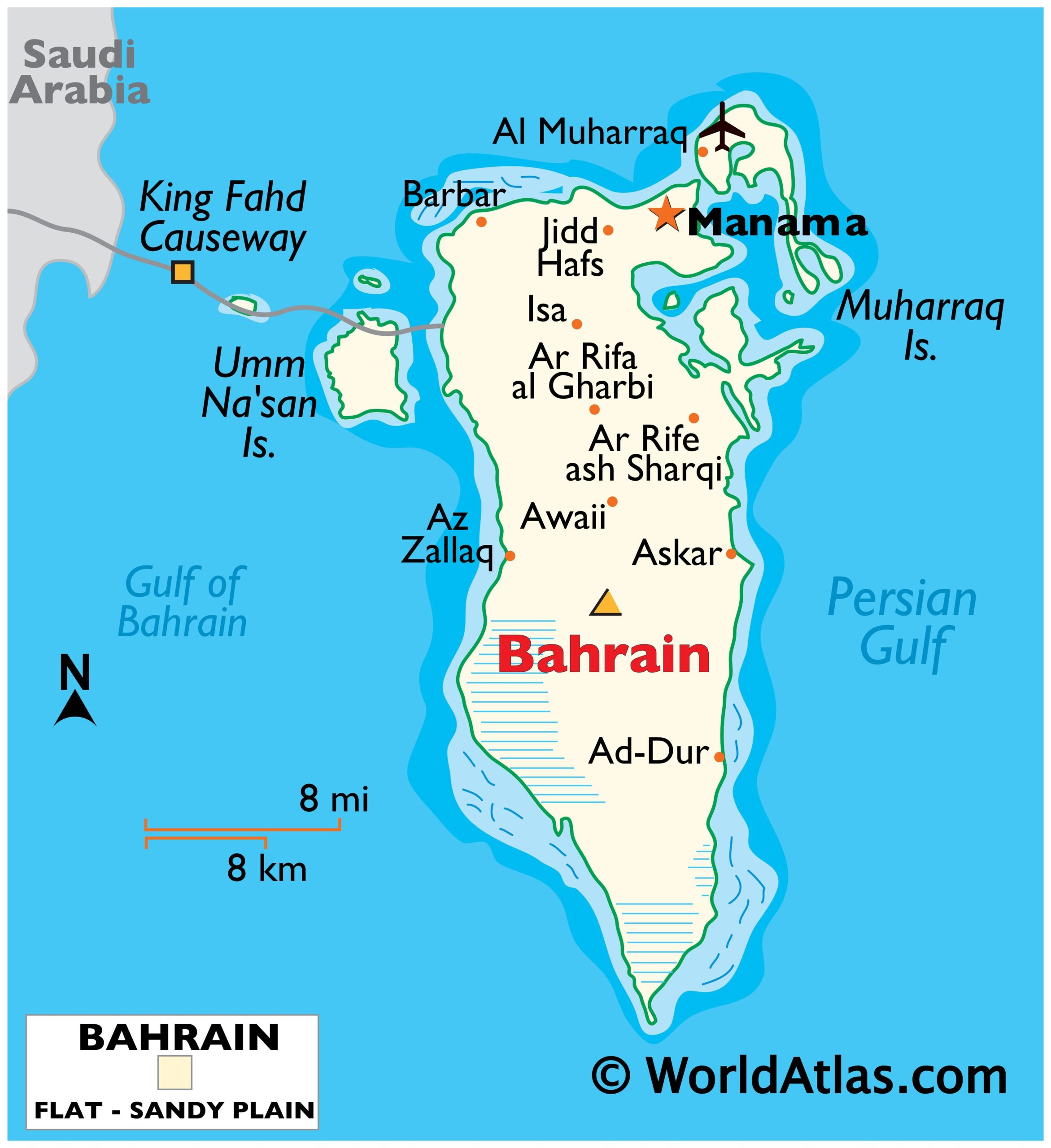
The island nation of Bahrain occupies a distinctive position in the Arabian Gulf, both geographically and historically. Though small in size, Bahrain has played an outsized role in regional trade, cultural exchange, and political development for thousands of years. Its identity has been shaped by its location as a crossroads between civilizations, its maritime traditions, and its diverse population.
Understanding Bahrain requires examining the layers of history that have contributed to its development, as well as the ways in which belonging and cultural diversity continue to define its society. From ancient settlements to a modern state, Bahrain reflects both continuity and transformation, offering insight into how small island nations can sustain rich and complex identities.
Geographical Setting and Early Significance
Bahrain is an archipelago composed of more than 30 islands, situated in the Persian Gulf between the Arabian Peninsula and Iran. Its central island has historically been the focal point of settlement and economic activity, supported by natural freshwater springs and fertile land, features that are relatively rare in the Gulf region.
This advantageous geography made Bahrain an early center of human habitation and trade. Its proximity to major maritime routes allowed it to connect Mesopotamia, the Indus Valley, and other ancient civilizations. As a result, Bahrain developed into a hub of commerce and cultural exchange long before the emergence of modern nation-states.
Ancient Civilizations and the Dilmun Era
One of the most significant periods in Bahrain’s early history is associated with the ancient civilization of Dilmun. Mentioned in Mesopotamian texts, Dilmun is believed to have been a prosperous trading center that flourished around the third millennium BCE. Archaeological discoveries, including burial mounds and settlement remains, provide evidence of a sophisticated society engaged in regional commerce.
Dilmun’s strategic position allowed it to serve as an intermediary between larger civilizations, facilitating the exchange of goods such as copper, pearls, and agricultural products. It also held symbolic importance in ancient mythology, often described as a land of purity or a sacred place.
The legacy of Dilmun contributes to Bahrain’s historical identity, linking the modern nation to one of the earliest known centers of trade and cultural interaction in the Gulf.
Islamic Influence and Regional Integration
The arrival of Islam in the 7th century marked a turning point in Bahrain’s cultural and social development. The region became part of the expanding Islamic world, adopting new religious, legal, and cultural frameworks.
Under various Islamic dynasties, Bahrain remained connected to broader regional networks. Trade continued to play a central role, and the population engaged in maritime activities such as fishing, pearl diving, and shipbuilding. These economic practices not only sustained livelihoods but also shaped cultural traditions and social organization.
Islamic influence remains a fundamental aspect of Bahrain’s identity today, reflected in its institutions, customs, and public life.
Colonial Encounters and the Path to Statehood
In the modern era, Bahrain came under increasing influence from external powers, particularly during the period of European expansion in the Gulf. In the 19th century, the island entered into agreements with the United Kingdom, which provided protection in exchange for influence over foreign affairs.
This period of British involvement introduced administrative reforms and greater integration into global economic systems. Bahrain’s strategic importance as a maritime hub and later as a center for oil production further enhanced its global connections.
Bahrain achieved independence in 1971, becoming a sovereign state. The transition marked the beginning of a new phase in its development, characterized by efforts to modernize the economy, strengthen national institutions, and define a cohesive identity.
Economic Transformation and Modern Development
The discovery of oil in the early 20th century transformed Bahrain’s economy and society. As one of the first Gulf states to develop its oil industry, Bahrain experienced rapid modernization, including the expansion of infrastructure, education, and healthcare.
However, Bahrain also recognized the need to diversify its economy beyond oil. Over time, it developed sectors such as banking, finance, tourism, and services, positioning itself as a regional economic center. This diversification has contributed to a more resilient economy and has attracted a diverse workforce from across the world.
Economic transformation has influenced patterns of belonging, as both citizens and expatriates participate in the country’s development. The presence of international communities has added to Bahrain’s cultural diversity while also raising questions about identity and integration.
Belonging and National Identity
Belonging in Bahrain is shaped by a combination of historical continuity, cultural heritage, and modern citizenship. For many Bahrainis, identity is rooted in family, community, and shared traditions, as well as in the broader national narrative.
The concept of belonging is also influenced by religion, as Bahrain’s population includes both Sunni and Shia Muslim communities. While these groups share many cultural practices, their distinct identities contribute to the social fabric of the nation.
At the same time, Bahrain’s role as a regional hub has brought together people from different countries and cultural backgrounds. Expatriates form a significant portion of the population, contributing to economic activity and cultural exchange. This dynamic creates a layered sense of belonging, where local and global identities coexist.
Cultural Diversity and Social Life
Bahrain’s cultural diversity is evident in its everyday life, from language and cuisine to festivals and artistic expression. Arabic is the official language, but English and other languages are widely used, particularly in business and education.
Cuisine
Bahraini cuisine reflects the island’s history as a trading center. It combines influences from the Arabian Peninsula, Persia, India, and East Africa. Dishes often feature rice, seafood, spices, and dates, highlighting both local resources and imported ingredients.
Art and Heritage
Traditional crafts such as weaving, pottery, and boat building remain important cultural practices. At the same time, contemporary art and cultural institutions have gained prominence, showcasing Bahrain’s engagement with global artistic trends.
Festivals and Traditions
Cultural and religious festivals play a central role in social life. Islamic holidays, national celebrations, and community events provide opportunities for gathering, reflection, and expression of shared values.
These cultural activities reinforce a sense of continuity while also allowing for adaptation and innovation.
Religion and Cultural Identity
Religion is a central component of Bahrain’s cultural identity. Islam shapes many aspects of daily life, including social norms, legal frameworks, and public rituals. Mosques serve not only as places of worship but also as centers of community interaction.
Bahrain is known for its relatively open and tolerant approach to religious diversity. In addition to Muslim communities, there are Christian, Hindu, and other religious groups, reflecting the country’s history of trade and migration.
This coexistence contributes to a broader understanding of cultural diversity, where different traditions are recognized and accommodated within the national framework.
Challenges and Social Dynamics
Despite its achievements, Bahrain faces challenges related to social cohesion, economic balance, and political representation. Differences in wealth distribution, employment opportunities, and access to resources can affect perceptions of inclusion and belonging.
Political developments and debates about governance have also shaped public discourse, highlighting the importance of dialogue and reform in maintaining stability. Addressing these challenges requires careful consideration of the country’s diverse population and its historical context.
Resilience and Future Outlook
Bahrain’s history demonstrates a capacity for adaptation and resilience. From ancient trade networks to modern economic diversification, the nation has continually responded to changing circumstances.
Looking ahead, Bahrain’s future will likely depend on its ability to balance tradition and innovation. Preserving cultural heritage while embracing new opportunities will be essential for sustaining its identity and promoting development.
Education, cultural exchange, and economic diversification will play key roles in shaping this future. By building on its strengths and addressing its challenges, Bahrain can continue to serve as a model of how diversity and belonging can coexist within a dynamic society.
Conclusion
The island of Bahrain represents a unique blend of history, culture, and modern development. Its origins as a center of ancient trade, its integration into the world, and its transformation into a contemporary state all contribute to a rich and multifaceted identity.
Belonging in Bahrain is shaped by both local traditions and global connections, reflecting the interplay between continuity and change. Cultural diversity, expressed through language, cuisine, art, and social life, is a defining feature of the nation.
Understanding Bahrain requires recognizing the depth of its historical roots and the complexity of its social fabric. As it continues to evolve, the country’s commitment to cultural diversity and shared identity will remain central to its ongoing development and place in the world.