

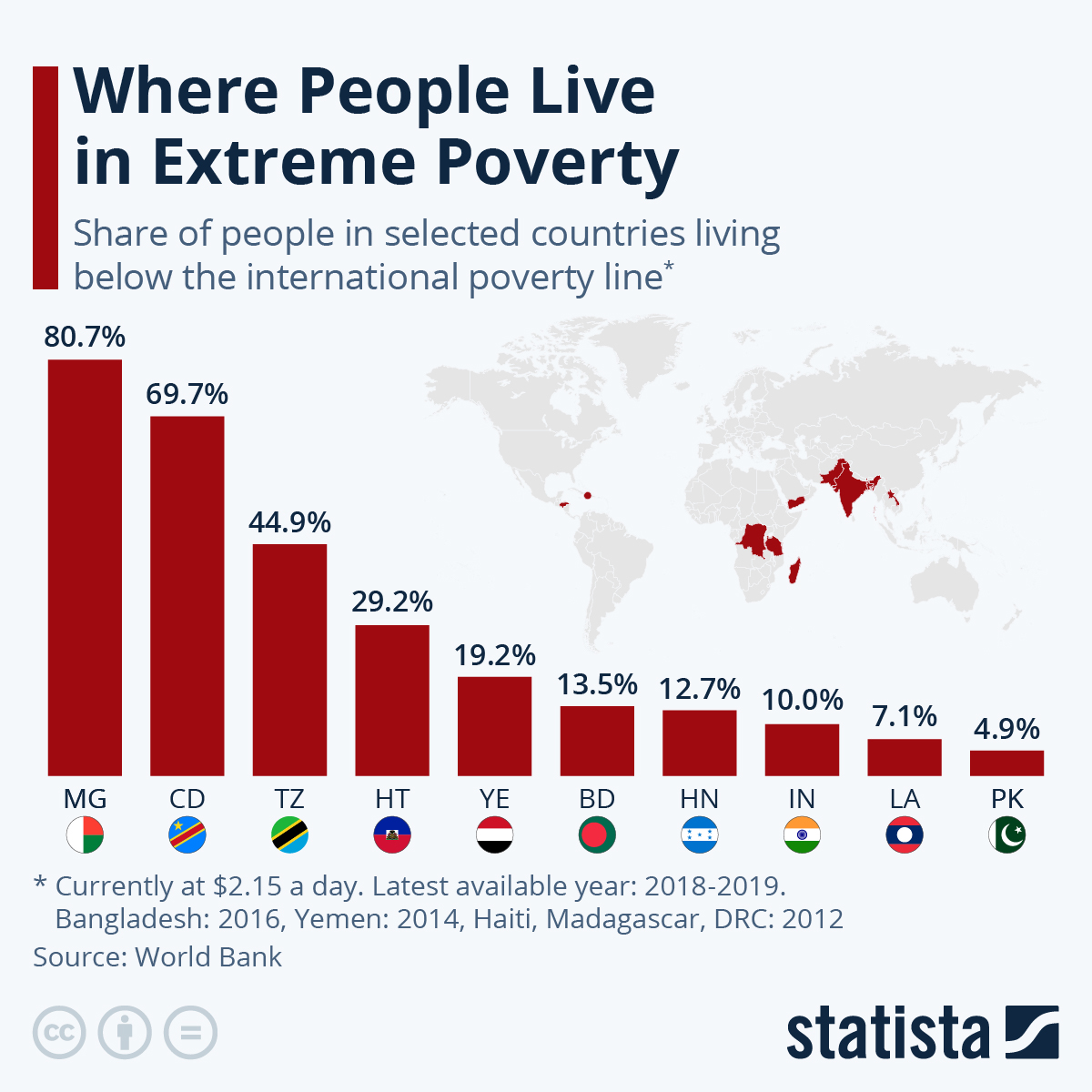
In the 21st century, the global crisis of extreme poverty has undergone a profound transformation, marked by remarkable early gains followed by stubborn stagnation. Defined by the World Bank as living on less than $2.15 per day, extreme poverty afflicted nearly 2 billion people at the turn of the millennium, representing over a quarter of the world’s population. By 2019, this figure had plummeted to around 660 million, or 8.5% globally, driven largely by rapid economic expansion in Asia.
However, progress has faltered dramatically since then. The COVID-19 pandemic reversed decades of advancement, pushing an additional 50 to 70 million people into destitution between 2019 and 2020. As of 2024-2025, approximately 700 to 808 million individuals, about 8.5% to 9.9% of the global populace remain trapped in this dire state. Projections paint a grim picture: without accelerated interventions, 622 million could still endure extreme poverty by 2030, far short of eradication goals.
The geography of this global crisis has shifted starkly toward vulnerability. Sub-Saharan Africa now hosts two-thirds of the world’s extreme poor, despite comprising just 16% of global population; rural areas there alone account for over half. Low-income countries, whose share of the extreme poor doubled from 23% in 2013 to 44% in 2023, bear 72% of cases, often in fragile, conflict-ridden states. Nations like Nigeria and the Democratic Republic of Congo concentrate nearly a quarter of those affected.
Urban poverty is rising too, particularly in Africa, where 50 million more city dwellers fell below the line over the past decade. Meanwhile, 3.4 billion people nearly 40% worldwide scrape by on under $6.85 daily, underscoring the fragility of broader prosperity. This evolving landscape demands urgent, targeted action to reignite momentum against the global crisis.
Identifying the Socioeconomic Drivers Fueling the Current Global Crisis
The global crisis of extreme poverty, affecting nearly 700 million people living on less than $2.15 per day, has been intensified by a confluence of socioeconomic forces that have stalled decades of progress. At the forefront is sluggish economic growth in the world’s poorest nations, particularly in low-income countries where the share of the extreme poor has nearly doubled from 23% in 2013 to 44% in 2023. This shift underscores how poverty is increasingly entrenched in fragile economies unable to generate sufficient jobs or income opportunities.
The COVID-19 pandemic delivered a devastating blow, reversing gains and pushing an estimated 50 million more people into extreme poverty between 2019 and 2020, the first substantial rise in a generation. Recovery has been uneven, with poverty rates in low-income countries now higher than pre-pandemic levels, compounded by economic instability and climate shocks. Sub-Saharan Africa exemplifies this vulnerability, hosting 67% of the global extreme poor despite comprising just 16% of the world’s population; here, rapid population growth outpaces poverty reduction, swelling the number from 275 million in 1990 to 426 million in 2022.
- Conflict and fragility: Two-thirds of the extreme poor reside in fragile and conflict-affected states, where instability disrupts livelihoods and aid efforts.
- Rural-urban disparities: Over half of the global extreme poor live in rural Sub-Saharan Africa, while urban poverty there has surged, adding 50 million more city dwellers in poverty over the past decade.
- External shocks: Climate events and global economic slowdowns exacerbate food insecurity and debt burdens in vulnerable regions.
These intertwined drivers, low growth, pandemics, conflicts, and demographic pressures, project a grim outlook, with 622 million still in extreme poverty by 2030 unless bold interventions disrupt the trajectory. Addressing them demands targeted policies to foster resilient economies and equitable development.
Case Studies of Nations Facing the Most Severe Economic Deprivation
In the landscape of the global crisis of extreme poverty, certain nations stand out as epicenters of hardship, where over two-thirds of the world’s poorest reside in Sub-Saharan Africa alone. These countries exemplify the entrenched challenges of low growth, conflict, and post-pandemic setbacks, trapping millions below the $2.15 daily threshold.
Nigeria, Africa’s most populous nation, hosts nearly a quarter of the global extreme poor, with projections estimating 107 million affected by 2030. Rapid population expansion outpaces economic gains, while oil dependency exacerbates inequality; rural areas suffer most, but urban poverty has surged, adding millions to the ranks of the destitute amid inflation and insecurity.
The Democratic Republic of the Congo (DRC) mirrors this plight, sharing the burden with Nigeria as home to a significant share of the world’s destitute. Decades of conflict have devastated infrastructure, displacing communities and halting agriculture in rural zones that dominate poverty statistics. Over half of global extreme poor now hail from rural Sub-Saharan Africa, where the DRC’s vast mineral wealth contrasts sharply with famine and disease.
In fragile states like South Sudan and the Central African Republic, poverty rates exceed 80 percent, fueled by civil unrest and climate shocks. These nations, eligible for International Development Association aid, represent 72 percent of extreme poverty cases, underscoring how instability amplifies deprivation.
- Nigeria: Population boom and urban poverty rise threaten 18% of world total by 2030.
- DRC: Conflict erodes rural livelihoods, concentrating half of Africa’s poor.
- Other hotspots: South Sudan and CAR highlight fragility’s toll.
These case studies reveal a global crisis demanding targeted interventions, as current trajectories forecast 622 million in poverty by 2030.
The Humanitarian Impact of Systemic Poverty on Health and Education
Systemic poverty exacts a devastating toll on human well-being, particularly in health and education, trapping generations in a cycle of deprivation amid the global crisis of extreme poverty affecting nearly 700 million people living on less than $2.15 per day. In regions like Sub-Saharan Africa, where two-thirds of the world’s extreme poor reside, inadequate nutrition and limited access to clean water fuel rampant malnutrition and preventable diseases, weakening immune systems and stunting physical development from infancy.
Children bear the brunt of this crisis. One in six children worldwide endures extreme poverty, with projections indicating 84 million will lack schooling by 2030 if trends persist. Malnourished youngsters face heightened risks of stunted growth, cognitive impairments, and chronic illnesses, perpetuating high infant mortality rates and reducing life expectancy. The COVID-19 pandemic reversed decades of progress, increasing poverty-driven health setbacks and exacerbating vulnerabilities in low-income countries.
Education suffers profoundly as well. Families prioritize survival over schooling, leading to dropout rates soaring in rural areas where over half of the global extreme poor reside. Without education, opportunities for economic mobility vanish, entrenching inequality. Girls are disproportionately affected, facing barriers like early marriage and household duties that curtail learning and future prospects.
- Health crises: Malnutrition affects millions, impairing brain development and increasing disease susceptibility.
- Education gaps: 84 million children at risk of illiteracy, hindering societal advancement.
- Intergenerational trap: Uneducated, unhealthy youth perpetuate poverty cycles.
Addressing this global crisis demands urgent interventions to safeguard health and education, breaking the chains of systemic poverty for sustainable human progress.
Strategic Frameworks and International Policy Shifts for Sustainable Relief
Addressing the global crisis of extreme poverty demands robust strategic frameworks that integrate economic resilience, climate adaptation, and inclusive governance. Recent reports underscore the urgency, with nearly 80% of the 1.1 billion people in multidimensional poverty exposed to climate hazards like extreme heat and flooding, particularly in South Asia and Sub-Saharan Africa. International bodies are pivoting toward policies that align poverty eradication with environmental sustainability to reverse stalled progress, where extreme poverty affects about 700 million people on less than $2.15 daily.
Key frameworks emphasize the World Bank’s Poverty, Prosperity, and Planet initiative, which promotes “triple wins” by linking poverty reduction to planetary health and shared prosperity. This approach targets low-income countries, home to 44% of the extreme poor despite comprising just 9% of the global population[3]. The UN’s Sustainable Development Goal 1 (SDG 1) calls for ending poverty by 2030, yet projections indicate 622 million will remain trapped without accelerated action amid climate shocks and sluggish growth.
Policy shifts include:
- Climate-Resilient Investments: Scaling up funding for hazard-exposed regions, prioritizing South Asia’s 99% poverty-climate overlap and Sub-Saharan Africa’s 67% share of extreme poor.
- Multidimensional Poverty Indexing: UNDP and OPHI’s tools guide targeted interventions beyond income, addressing health, education, and vulnerability.
- IDA Resource Mobilization: Enhancing aid to fragile states, where 72% of the extreme poor reside, fostering growth in rural Africa, now over 50% of global poverty.
- Private Sector Partnerships: Encouraging green jobs and digital inclusion to boost escapes from poverty, projected at only 69 million by 2030 under current trends.
These strategies require coordinated global commitments, urging wealthier nations to reform debt relief and trade policies. By embedding equity in climate finance, sustainable relief can transform the global crisis into a pathway for shared prosperity.