

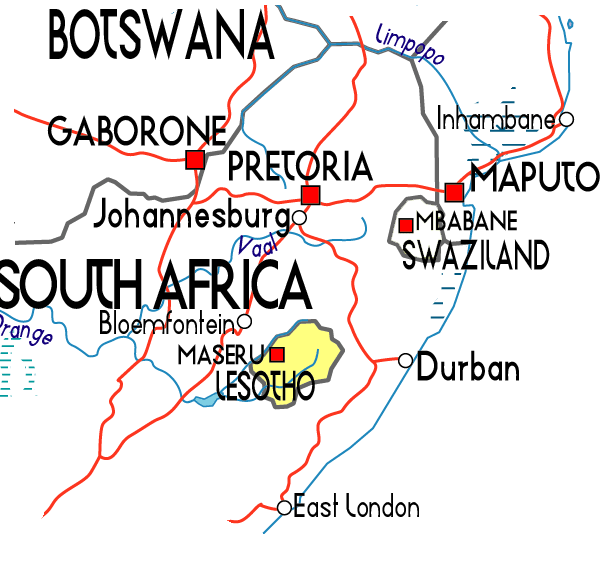
Nestled high in the Drakensberg Mountains, the Kingdom of Lesotho stands as a remarkable geopolitical anomaly. It is the only independent country in Africa entirely surrounded by another nation, South Africa. This unique status as an enclave within a larger continental power immediately sets Lesotho apart, prompting the question: why does this small, mountainous nation maintain its own sovereign leadership? Lesotho is not merely a territory within South Africa; it is a distinct kingdom with its own constitution, government, and monarchy, a testament to a long and proud history of self-determination. This sovereign kingdom in the sky, often referred to as the “Kingdom in the Sky,” possesses a global standing that belies its geographical position, making it a fascinating subject for understanding the complexities of modern statehood and national identity in Africa.
The Historical Origins of the Basotho Nation and the Leadership of King Moshoeshoe I
The unique sovereign status of Lesotho is deeply rooted in its fascinating historical origins and the visionary leadership of King Moshoeshoe I. The Basotho nation, as we know it today, began to coalesce in the early 19th century. This period was marked by widespread conflict and displacement across Southern Africa, often referred to as the Mfecane or Difaqane. Amidst this turmoil, a young leader named Moshoeshoe emerged, not through inherited power alone, but through his strategic acumen and his ability to unite disparate clans.
Moshoeshoe I, born around 1786, was a chief of the Bakoteli lineage. He skillfully gathered groups fleeing the violence, offering them refuge and establishing a protected settlement at Thaba Bosiu, a formidable mountain fortress. This sanctuary became the nucleus of the Basotho nation. His leadership was characterized by diplomacy, a willingness to integrate newcomers, and a pragmatic approach to governance. He fostered a sense of shared identity, laying the groundwork for a distinct Basotho people and a unified territory.
The establishment of Thaba Bosiu and Moshoeshoe’s inclusive policies were instrumental in forming a cohesive political entity capable of resisting external pressures. This foundation of unity and strong leadership would prove crucial in the nation’s subsequent struggle for independence.
Strategic Resistance: How the Basotho People Preserved Their Independence During the Colonial Era
The journey of Lesotho to maintaining its sovereignty during the tumultuous colonial era was a testament to the strategic acumen and unwavering spirit of the Basotho people. Under the astute leadership of King Moshoeshoe I, the nascent Basotho nation faced immense pressure from expanding European powers, particularly the British and the Boers of the Orange Free State. Rather than succumbing to outright conquest, Moshoeshoe employed a sophisticated blend of diplomacy, strategic alliances, and calculated resistance.
Recognizing the military superiority of their adversaries, the Basotho did not shy away from warfare when necessary. However, their resistance was often characterized by guerilla tactics and a deep understanding of their mountainous terrain, which proved formidable for conventional armies. Moshoeshoe I skillfully navigated complex geopolitical landscapes, seeking protection and recognition from the British Crown when facing existential threats from the Boers. This pragmatic approach, coupled with the sheer determination of his people to preserve their autonomy, laid the groundwork for Lesotho’s eventual recognition as a distinct political entity, a crucial step in its path to modern statehood and its unique status as an independent kingdom within the heart of South Africa.
From Basutoland to Lesotho: The Path to Modern Statehood and International Recognition
The journey from a British protectorate to a fully sovereign nation was a defining chapter in Lesotho’s history. For decades, the territory known as Basutoland navigated the complexities of colonial rule, a period that solidified its distinct identity and fostered a deep-seated desire for self-determination. The post-World War II era saw a growing global push for decolonization, and Basutoland was no exception. Local political movements gained momentum, advocating for greater autonomy and eventually, full independence.
Negotiations with the United Kingdom intensified throughout the late 1950s and early 1960s. These discussions were crucial in laying the groundwork for self-governance and establishing the constitutional framework for a future independent state. The efforts culminated on October 4, 1966, when Basutoland officially became the independent Kingdom of Lesotho. This date marked a monumental achievement, signifying the end of colonial administration and the dawn of a new era as an internationally recognized sovereign nation. The transition was celebrated as a testament to the enduring spirit and resilience of the Basotho people in securing their own destiny and asserting their place on the global stage.
The Geopolitical Paradox: Navigating Sovereignty as a Landlocked Nation Inside South Africa
Lesotho’s status as a sovereign kingdom entirely surrounded by South Africa presents a unique geopolitical paradox. This landlocked position, often seen as a strategic vulnerability, has instead fostered a remarkable resilience and a distinct identity for the Basotho nation. While geographically enveloped, Lesotho has consistently asserted and maintained its independence, largely due to a combination of historical factors and shrewd diplomacy. Its existence as the only independent country in Africa in such a predicament underscores the nation’s enduring commitment to self-determination. This peculiar arrangement necessitates a delicate balance in its foreign relations, particularly with its powerful neighbor, ensuring that its sovereignty remains paramount.
The nation’s ability to navigate this complex geopolitical landscape is a testament to its people and leadership. Understanding Lesotho means appreciating this intricate relationship with South Africa, a dynamic that has shaped its history and continues to define its present and future on the global stage. It is a fascinating case study in how a smaller nation can thrive and maintain its autonomy despite being geographically dependent.
Why Lesotho Maintains Its Own Independent Leadership and Monarchy
The persistence of Lesotho’s independent leadership and its constitutional monarchy is not merely a formality; it is the cornerstone of the nation’s survival. Unlike many post-colonial African states that transitioned into republics, Lesotho has retained its traditional leadership structure because the monarchy serves as a vital symbol of national unity. This system provides a sense of continuity that predates the arrival of European settlers, anchoring the Basotho people to their ancestral heritage.
There are several key reasons why Lesotho maintains its own distinct leadership despite being entirely surrounded by South Africa:
- National Identity: The King, currently His Majesty Letsie III, acts as a unifying figurehead who transcends partisan politics, representing the soul of the Basotho nation.
- Traditional Governance: The integration of the chieftainship system into modern governance ensures that local communities remain connected to their historical roots.
- Diplomatic Autonomy: Maintaining its own leadership allows Lesotho to hold a seat at the United Nations and the African Union, ensuring its specific interests are voiced on the global stage.
By upholding its own monarchy, Lesotho reinforces its status as a sovereign entity rather than a provincial extension of its neighbor, preserving a unique political identity that has been defended for centuries.
Cultural Identity and the Basotho Blanket: Symbols of National Autonomy
The enduring spirit of Lesotho’s national autonomy is deeply woven into its rich cultural tapestry, with the iconic Basotho blanket standing as a potent symbol of this distinct identity. More than just a garment for warmth in the mountainous terrain, the blanket, known as a “lekhai” or “kobo,” is a vibrant expression of Basotho heritage. Each blanket is meticulously crafted with intricate patterns and bold colors, telling stories of lineage, status, and significant life events. The adoption and continued use of these unique blankets, even amidst external influences, underscore the Basotho people’s commitment to preserving their cultural distinctiveness.
This dedication to cultural preservation is a cornerstone of Lesotho’s sovereignty. It represents a conscious choice to maintain traditions and symbols that differentiate them, asserting their right to self-determination. The Basotho blanket, therefore, serves as a tangible reminder of their unique history and a powerful emblem of their ongoing commitment to national autonomy within the African continent. It is a visual testament to why Lesotho maintains its own independent leadership and monarchy, celebrating a heritage that is unequivocally their own.
Economic Interdependence and the Strategic Importance of the Lesotho Highlands Water Project
Lesotho’s position as a landlocked nation entirely within South Africa profoundly shapes its economic realities. While this geographical reality presents challenges, it also fosters a unique form of economic interdependence. The most prominent manifestation of this relationship is the Lesotho Highlands Water Project (LHWP). This ambitious, multi-phase initiative is a testament to transboundary cooperation, designed to harness the abundant water resources of Lesotho’s mountainous interior and supply them to the arid regions of South Africa, particularly Gauteng.
The LHWP is not merely an engineering marvel; it is a cornerstone of Lesotho’s economy. The project generates significant revenue through water sales to South Africa, providing a vital source of foreign exchange and contributing substantially to national income. Furthermore, the construction and ongoing maintenance of the dams, tunnels, and associated infrastructure create employment opportunities for Basotho citizens. Beyond direct economic benefits, the LHWP has spurred the development of related industries and has played a crucial role in solidifying the strategic importance of Lesotho within the broader Southern African economic landscape. This symbiotic relationship underscores how Lesotho, despite its sovereign status, is intricately linked to its larger neighbor through shared resources and mutual economic benefit.
Essential Facts to Know About the Kingdom in the Sky: A Summary of Lesotho’s Global Standing
Lesotho, often referred to as the “Kingdom in the Sky,” stands as a unique sovereign nation entirely encircled by South Africa. This geographical reality presents a fascinating geopolitical paradox, yet Lesotho maintains its distinct identity and independent leadership. Understanding its global standing requires appreciating several key facts.
Here are some essential points to know about this remarkable country:
- Sovereign Enclave: Lesotho is one of only three countries in the world that is entirely landlocked within another country (the others being San Marino and Vatican City within Italy). This absolute geographical dependence on South Africa makes its sovereignty all the more remarkable.
- Constitutional Monarchy: The country is a constitutional monarchy, with King Letsie III as the reigning monarch. While the King holds a symbolic and ceremonial role, executive power rests with the Prime Minister and the government.
- International Recognition: Lesotho is a member of the United Nations, the African Union, and the Southern African Development Community (SADC), actively participating in regional and international affairs.
- The Lesotho Highlands Water Project: This ambitious and vital infrastructure project is a testament to Lesotho’s strategic importance. It supplies water and hydroelectric power to South Africa, fostering a complex but crucial economic interdependence.
- Cultural Richness: The Basotho people possess a vibrant and distinct cultural heritage, proudly expressed through their language (Sesotho), traditional attire like the iconic Basotho blanket, and unique customs. This cultural identity is a cornerstone of their national autonomy.