

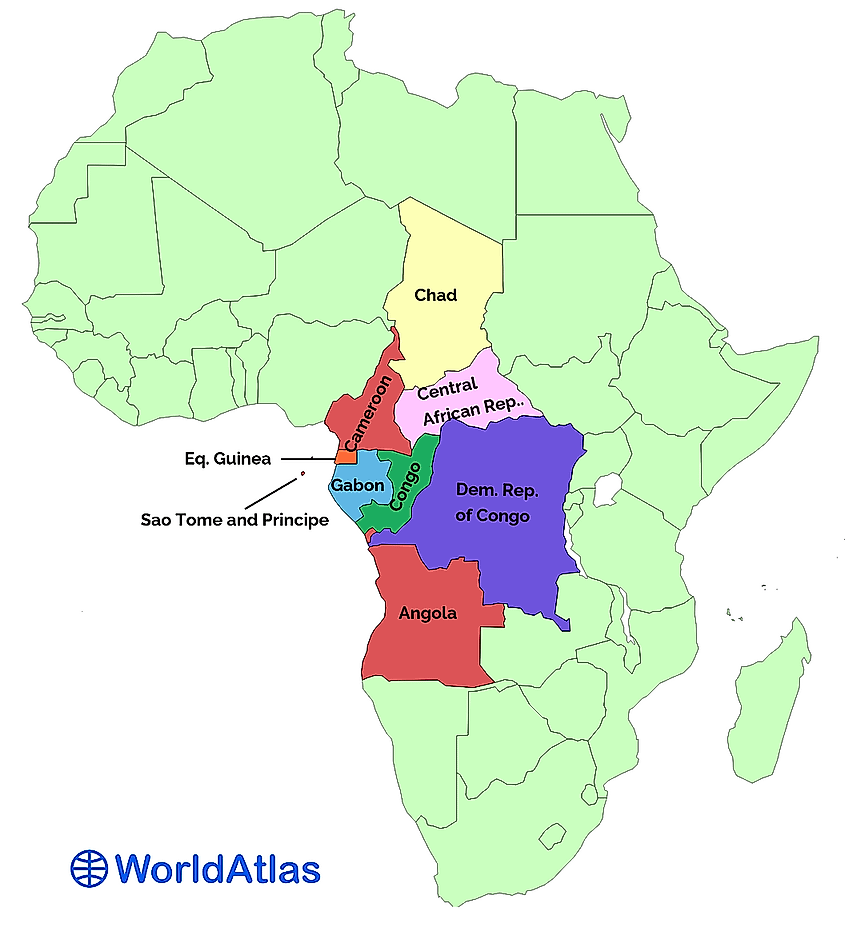
Poverty in Sub-Saharan Africa is often discussed in simplified terms, but in reality it is the result of long historical processes, economic systems shaped over centuries, and ongoing global inequalities that continue to influence development today. The region is vast and diverse, covering many nations with different cultures, political systems, and economic realities, yet it is frequently treated as a single unit in global discussions. This oversimplification hides the complexity of the issue and makes it harder to understand the true roots of poverty.
To fully grasp why poverty persists in parts of the region, it is necessary to look beyond immediate causes and examine how historical disruptions, external economic structures, internal governance challenges, environmental pressures, and demographic changes have all interacted over time. Poverty in this context is not the result of a single factor, but rather a layered outcome of many forces acting together across generations.
Early Societies and Pre-Colonial Economic Organization
Before the arrival of European colonial powers, the region now known as Sub-Saharan Africa was home to a wide range of organized societies, kingdoms, and trade networks. These societies were not uniform, but they were often highly developed in ways suited to their environments and social structures. Agriculture, livestock farming, craftsmanship, mining, and regional trade formed the backbone of many economies.
Large political entities such as the Mali Empire, Songhai Empire, and Great Zimbabwe developed complex systems of governance and commerce. Trade routes connected inland regions with coastal areas and extended across the Sahara to North Africa and beyond. Goods such as gold, salt, ivory, textiles, and agricultural products moved through these networks, supporting economic activity and cultural exchange.
It is important to understand that these systems were not primitive or static. They were adaptive and functional within their historical context. However, they were organized differently from industrial economies that later emerged in Europe. The disruption of these systems would later have long-lasting consequences.
Disruption Through the Slave Trade
One of the most damaging historical processes affecting the region was the transatlantic slave trade. Over several centuries, large numbers of people were forcibly taken from their communities and transported across the Atlantic Ocean to work in foreign colonies.
This process did not only remove individuals from their societies; it also weakened entire communities. Families were separated, local economies lost labor forces, and political stability was undermined in many areas. In some regions, conflict increased as groups became involved in capturing and trading people, further destabilizing societies.
The long-term consequences were profound. The disruption of population structures and economic systems created gaps in development that would take generations to recover. While the full economic impact is difficult to measure precisely, historians widely agree that this period significantly altered the region’s development trajectory.
Colonial Rule and Economic Reorganization
The colonial period introduced a new and deeply transformative economic structure. European powers divided the continent into territories that often did not reflect existing cultural or political boundaries. These new borders grouped together diverse communities under centralized colonial administrations.
Colonial economies were primarily designed for resource extraction. Raw materials such as minerals, agricultural commodities, and other valuable resources were extracted and exported to European markets. Infrastructure, including railways and ports, was developed mainly to support this outward flow rather than to connect local economies internally.
This system discouraged industrial development within the region. Local manufacturing was limited, and many traditional industries were weakened or replaced by imported goods. As a result, colonial economies became highly dependent on external markets and lacked diversified internal economic structures.
These patterns created structural imbalances that did not disappear after independence. Instead, many newly independent states inherited economic systems that were already oriented toward external dependency.
Post-Independence Political and Economic Challenges
After independence movements in the mid-20th century, many countries in Sub-Saharan Africa faced the difficult task of building new political and economic systems from structures that were not designed for self-sustained development. The transition period was often marked by instability, as new governments attempted to establish authority and national identity.
In several cases, political instability, military interventions, and internal conflicts disrupted development efforts. Weak institutions made it difficult to implement long-term economic planning, while corruption and governance challenges reduced the effectiveness of public services in some countries.
At the same time, global economic conditions placed additional pressure on emerging economies. Many countries depended heavily on exporting a limited range of commodities, making them vulnerable to fluctuations in international prices. When prices fell, national revenues declined sharply, affecting public investment in infrastructure, education, and healthcare.
Despite these challenges, it is important to note that progress has not been uniform. Some countries have made significant improvements in governance, economic diversification, and poverty reduction, while others continue to face persistent structural difficulties.
Global Economic Structure and Unequal Exchange
A major factor influencing poverty in the region is its position within the global economic system. Many economies in Sub-Saharan Africa continue to rely heavily on exporting raw materials rather than finished goods. This limits the amount of value that can be generated within the region itself.
When countries export unprocessed resources and import finished products, they often receive less economic benefit compared to nations with strong manufacturing sectors. This imbalance affects income levels, employment opportunities, and long-term economic growth.
In addition, access to global markets is often shaped by trade agreements, pricing structures, and competition with more industrialized economies. These factors make it difficult for many countries in the region to rapidly expand their manufacturing base or diversify their economies.
As a result, structural dependency continues to play a role in shaping economic outcomes, even in countries that are politically stable.
Population Growth and Urban Expansion
Another important factor influencing economic conditions is rapid population growth. Many countries in Sub-Saharan Africa have some of the youngest and fastest-growing populations in the world. While this can create long-term economic potential, it also places immediate pressure on infrastructure, education systems, and job markets.
In many urban areas, cities have expanded faster than public services can develop. This has led to challenges such as housing shortages, informal settlements, and limited access to clean water and sanitation in some regions.
At the same time, rural areas continue to rely heavily on agriculture, which can be affected by weather conditions and limited access to modern farming technologies. The movement of people from rural to urban areas in search of opportunities has also increased pressure on cities, creating uneven development patterns.
Education, Skills, and Human Development
Education is one of the most important factors in long-term economic development, yet access to quality education remains uneven across the region. While many countries have made progress in increasing enrollment rates, challenges remain in terms of infrastructure, teacher availability, and educational quality.
Limited access to higher education and technical training can restrict the development of skilled labor forces needed for industrial growth and innovation. This affects productivity and limits opportunities for economic diversification.
Human development is closely linked to poverty reduction, and gaps in education and skills continue to influence income inequality and employment levels across many societies in the region.
Environmental Pressures and Climate Vulnerability
Environmental conditions also play a significant role in shaping economic outcomes. Many regions depend heavily on agriculture, which is sensitive to climate variability. Droughts, floods, and shifting weather patterns can reduce crop yields and affect food security.
Climate change has increased the frequency and severity of some of these challenges, particularly in areas where agricultural systems rely on predictable rainfall. This creates additional risks for rural communities that depend on farming as their primary source of income.
Geographical factors such as landlocked countries and limited transportation infrastructure can also increase the cost of trade and reduce access to international markets, further affecting economic development.
Conflict and Institutional Weakness in Some Regions
In certain parts of Sub-Saharan Africa, conflict and political instability have significantly slowed development. Civil wars, insurgencies, and regional tensions can destroy infrastructure, displace populations, and disrupt economic activity.
These conditions create cycles of poverty that are difficult to break, as instability reduces investment and weakens institutions responsible for delivering public services.
However, it is equally important to recognize that many countries in the region have remained stable and continue to make steady progress despite broader challenges.
Development Assistance and External Support
International aid and development programs have played an important role in addressing poverty in the region. These efforts have supported healthcare systems, education initiatives, infrastructure development, and emergency relief programs.
While aid has contributed to improvements in many areas, there are ongoing debates about its long-term effectiveness. Some argue that it can create dependency, while others emphasize its importance in filling critical gaps in development.
Increasingly, there is a shift toward partnerships, local capacity building, and sustainable development strategies that focus on strengthening internal systems rather than relying solely on external assistance.
Conclusion
The persistence of poverty in Sub-Saharan Africa is the result of multiple interconnected factors that span history, economics, governance, and environment. Historical disruptions such as the slave trade and colonial restructuring created long-term structural challenges, while post-independence governance issues and global economic inequalities have continued to shape development patterns.
At the same time, the region is not defined solely by poverty. It is a diverse and dynamic part of the world with significant cultural richness, growing urban centers, and increasing economic potential. Many countries are making measurable progress in education, infrastructure, and governance.
Understanding poverty in this context requires moving beyond simplified explanations and recognizing the complex interaction of historical legacies and modern challenges. Only through this broader perspective can meaningful and sustainable solutions be developed that address both the symptoms and the underlying causes of poverty in the region.